Understanding Material Strength, Ductility & Performance
What Is It
Tensile Testing
Applicable Standards: ASTM A370, IS 1608, API 5L, API 1104, ASME Section IX.
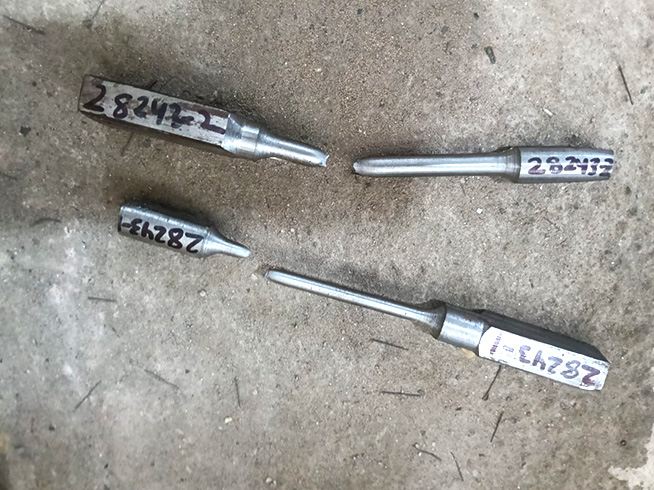
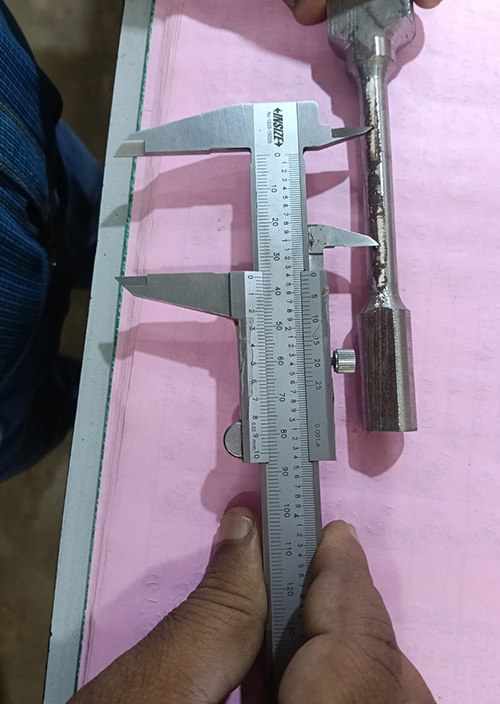
Tensile Testing determines how a material behaves when subjected to a controlled pulling force until it reaches failure. The test provides key mechanical properties such as ultimate tensile strength, yield strength, elongation, and reduction of area.
These results help determine whether a material meets required specifications and is suitable for its intended application.
Why Tensile Testing
Essential Information About Strength & Ductility
Strength
Determines the maximum stress a material can withstand before failure.
Yield Performance
Identifies the point at which permanent deformation begins.
Ductility
Measures how much a material can stretch before fracture.
Material Verification
Helps confirm that materials meet specified mechanical requirements.
How It Works
Our Tensile Testing Method
Specimen Preparation
A test specimen is prepared according to the applicable testing standard.
Specimen Positioning
The specimen is securely mounted in the tensile testing machine.
Controlled Loading
Axial tensile force is gradually applied to the specimen.
Deformation & Failure
The specimen continues to elongate until it reaches its maximum load and eventually fractures.
Result Analysis
Key properties including tensile strength, yield strength, elongation, and reduction of area are calculated and documented.
Our System
Our Tensile Testing System
Our testing process is designed to provide accurate and repeatable mechanical property measurements.
Controlled Load Application
Precise application of tensile force throughout the test.
Mechanical Property Evaluation
Measurement of strength, yield behavior, and ductility.
Standard-Compliant Testing
Testing procedures aligned with applicable industry standards.
Accurate Result Analysis
Detailed evaluation of load, stress, strain, and specimen deformation.
Comprehensive reporting supports quality and compliance requirements.
Applications
Applications of Tensile Testing
Metals & Alloys
Evaluation of strength and ductility of engineering materials.
Welding & Fabrication
Verification of material and welded joint performance.
Oil & Gas
Testing of materials used in pipelines and critical infrastructure.
Automotive Components
Assessment of material strength and mechanical performance.
Quality Control & Material Certification
Verification that materials meet specified mechanical property requirements.
Why IRC Engineering Services
Reliable Testing. Measurable Performance.
25+ Years of Experience
Proven experience in inspection and material testing services.
Certified Expertise
Qualified professionals with knowledge of industry testing requirements.
Accurate Results
Controlled testing procedures for dependable mechanical property data.
Industry Compliance
Testing aligned with applicable national and international standards.
Complete Reporting
Clear, structured reports to support quality assurance and project documentation.
We would love to connect with you, please fill out this form and our dedicated team will respond to you shortly.