Turbine Residual Life Assessment (RLA)
What Is It
A Turbine Rotor Doesn’t Fail Overnight
It fails after years of stress cycles you never measured.
IRC Engineering’s Turbine Residual Life Assessment gives you a clear, evidence-based read on the true condition of your rotors, casings, and critical components.
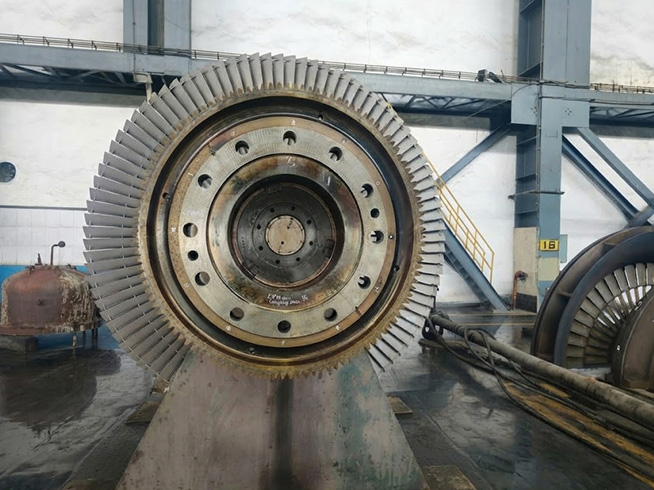
Assessment covers:
- Turbine rotors
- Casings
- Blading
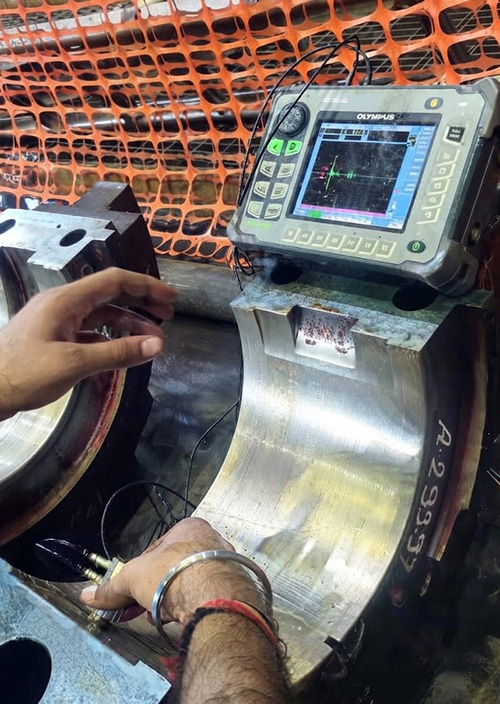
- Surface flaws
- Subsurface flaws
Why Turbine RLA
High-Stress Components Deserve High-Precision Answers
Turbine rotors, casings, and blading operate under sustained high temperature, high stress, and cyclic loading. Over time, fatigue, creep, and crack propagation can develop without being visible from the outside.
Prevent Failure
Help prevent catastrophic rotor or blade failure.
Plan R&M
Inform whether to refurbish, re-rate, or replace.
Real Plant Experience
Backed by turbine operation, maintenance, and inspection experience from NTPC and BHEL.
Connected Capability
Complements Steam Path Audits and stress analysis of critical piping.
What Our Turbine RLA Includes
Our Turbine RLA Method
A focused evaluation of turbine condition and remaining safe operating life.
Non-Destructive Testing
Testing of rotors, casings, and blading for surface and subsurface flaws.
Finite Element Analysis
FEA of turbine rotors and casings to evaluate stress distribution under operating loads.
Crack Propagation Assessment
Assessment of crack propagation and survival analysis for critical components.
Steam Path Audit Findings
Where relevant, findings are used to correlate mechanical condition with efficiency loss.
Remaining Life Estimate
A clear, documented estimate of remaining safe operating life.
Deep Technical Capability
More Than an Inspection Checklist
Critical-Component Testing
Non-destructive testing of rotors, casings, and blading.
Stress Evaluation
Finite Element Analysis of rotors and casings under operating loads.
Crack Assessment
Crack-propagation and survival analysis for high-value components.
Steam Path Correlation
Steam Path Audit findings, where relevant, linked with mechanical condition and efficiency loss.
A clear, evidence-based view of how much safe operating life is genuinely left.
Where We Apply It
Turbine Components We Assess
Turbine Rotors
Assess condition under years of stress cycles.
Turbine Casings
Evaluate stress distribution under operating loads.
Turbine Blading
Identify surface and subsurface flaws.
High-Value Components
Assess crack propagation and survival.
Critical Turbine Assets
Estimate remaining safe operating life.
Why IRC
Why IRC Engineering Services?
400+ Assessments
400+ Turbine Condition Assessments completed to date.
Evidence-Based Answers
A clear assessment of turbine condition and remaining safe life.
NTPC & BHEL Background
Experience in turbine operation, maintenance, and inspection.
Technical Depth
Non-destructive testing, FEA, crack assessment, and Steam Path Audits.
R&M Support
Helps inform refurbishment, re-rating, or replacement decisions.
IRC Engineering helps turn hidden turbine deterioration into a clear operating-life decision.
We would love to connect with you, please fill out this form and our dedicated team will respond to you shortly.