Magnetic Particle Testing
What Is It
See the Flaws Steel Doesn’t Show You
A crack you can’t see with the naked eye is still a crack that can bring down a plant.
Magnetic Particle Testing (MT) is a fast, reliable, and cost-effective non-destructive testing method used to detect surface and near-surface defects in ferromagnetic materials.
Fatigue cracks, weld defects, and stress-induced fractures can remain hidden just below the surface of critical components-from turbine blades and pressure vessel welds to pipelines and rotating equipment. IRC Engineering’s Magnetic Particle Testing reveals these flaws before they escalate into unplanned downtime or safety incidents.
Our ASNT Level-II and Level-III certified inspectors bring extensive inspection experience across power, oil & gas, and process industries.
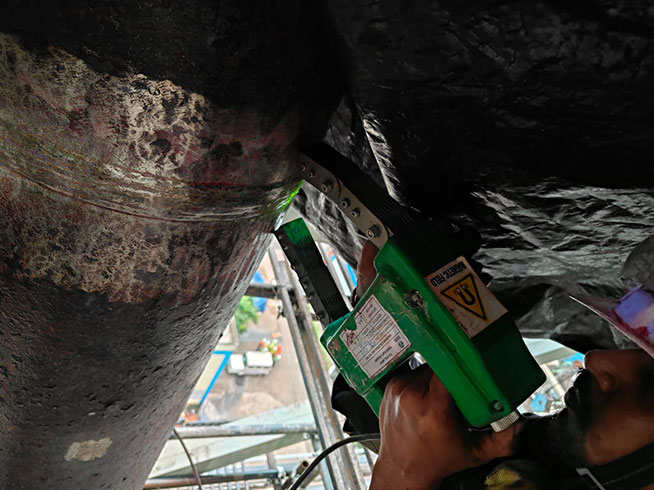
Our Magnetic Particle Testing supports:
- Pressure vessels & piping
- Turbine blades & rotors
- Welded components
- Drilling & rig equipment
- Castings & forgings
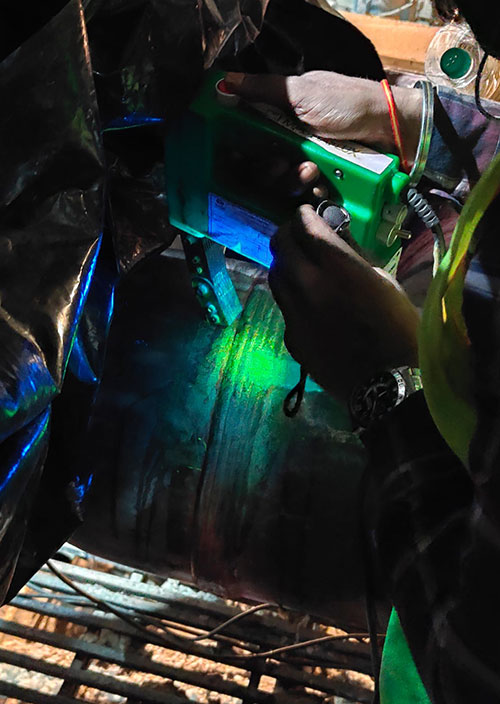
Why Magnetic Particle Testing
Why Choose Magnetic Particle Testing?
Magnetic Particle Testing combines speed, sensitivity, and cost-effectiveness, making it one of the most practical methods for identifying surface and near-surface cracking in ferromagnetic components.
Fast
Results are visible in real time, allowing defects to be identified directly on-site.
Highly Sensitive
Detects fine surface and near-surface cracks that may not be visible during a conventional visual inspection.
Cost-Effective
One of the most economical NDT methods for inspecting ferromagnetic components.
Field-Proven
Suitable for components of virtually any size or shape, from individual parts to large industrial equipment.
How It Works
Our Magnetic Particle Testing Method
We follow a systematic inspection process to produce clear and reliable indications of surface and near-surface flaws.
Surface Preparation
The component is cleaned and prepared so that the inspection surface is free from contaminants that could interfere with the test.
Magnetization
The component is magnetized so that magnetic flux flows through the material.
Particle Application
Fine ferrous magnetic particles are applied either in dry form or as a liquid suspension.
Flaw Detection
When magnetic flux encounters a discontinuity such as a crack, seam, or inclusion, it leaks from the material and creates a localized magnetic field. The magnetic particles are attracted to this leakage field and cluster at the defect.
Inspection & Reporting
The visible indications are evaluated by qualified inspectors to determine the location and nature of the discontinuity, followed by appropriate inspection reporting.

Our Testing System
Magnetic Particle Testing for Critical Components
Our Magnetic Particle Testing service combines qualified personnel, appropriate inspection techniques, and field-ready equipment to identify defects before they become failures.
Surface Crack Detection
Identify cracks and discontinuities breaking through the surface of ferromagnetic components.
Near-Surface Flaw Detection
Reveal subsurface discontinuities located close to the inspection surface.
Dry & Wet Particle Techniques
Use dry magnetic particles or liquid suspension techniques according to the component and inspection requirements.
On-Site Inspection
Perform inspections directly at industrial facilities, shutdowns, maintenance sites, and critical equipment locations.
IRC Engineering delivers reliable magnetic particle inspection with a focus on safety, accuracy, and practical field application.
Applications
Applications of Magnetic Particle Testing
Magnetic Particle Testing is widely used across industrial components where surface and near-surface cracking can affect structural integrity and operational safety.
Pressure Vessels, Piping & Storage Tanks
Detect surface cracks and corrosion-related flaws in critical pressure-containing components.
Turbine Blades & Rotors
Identify fatigue cracking caused by high-stress operating conditions.
Weld Inspection
Check weld integrity during fabrication, maintenance, and in-service inspection.
Drilling & Rig Equipment
Detect fatigue and wear-related cracking in demanding oil & gas equipment.
Castings & Forgings
Identify surface-breaking manufacturing defects in ferromagnetic cast and forged components.
IRC Engineering provides Magnetic Particle Testing for both routine inspection requirements and critical failure investigations.
Why IRC
Why IRC Engineering Services?
When a defect can become a failure, inspection quality matters. IRC Engineering combines qualified personnel, industrial experience, and disciplined inspection practices to deliver dependable NDT results.
ASNT Level-II & Level-III Inspectors
Qualified inspection professionals with experience in magnetic particle testing and industrial NDT.
Extensive Industry Experience
Inspection experience across power, oil & gas, and process industries.
Fast Inspection
Efficient testing that helps identify defects without unnecessary delays to operations.
Reliable Results
Clear magnetic particle indications help inspectors locate surface and near-surface discontinuities accurately.
Flexible Field Services
Suitable for routine shutdown inspections as well as critical failure investigations.
From individual components to major industrial assets, IRC Engineering brings experienced NDT expertise to every inspection.
Important Material Limitation
The One Thing to Know About MT
Magnetic Particle Testing works only on ferromagnetic materials.
Suitable materials include:
- Steel
- Iron
- Nickel
- Cobalt
- Ferromagnetic alloys
For non-magnetic materials such as austenitic stainless steel or aluminium, Magnetic Particle Testing is not suitable. Our team can recommend an alternative inspection method, such as Dye Penetrant Testing or Eddy Current Testing, to ensure you get the right test for the right material.
We would love to connect with you, please fill out this form and our dedicated team will respond to you shortly.