Fitness for Service Assessment
What Is It
Engineering-Based Evaluation of Ageing & Damaged Equipment
Assess. Evaluate. Extend Asset Life.
Fitness for Service (FFS) assessment helps determine whether ageing, damaged, or corroded equipment can continue operating safely and reliably. IRC Engineering Services uses API 579-based assessment methodologies, advanced NDT inspection, engineering analysis, and specialised software to evaluate the remaining integrity and serviceability of critical assets.
Our assessments help industries make informed decisions on whether equipment should continue operating, be repaired, monitored, or replaced.
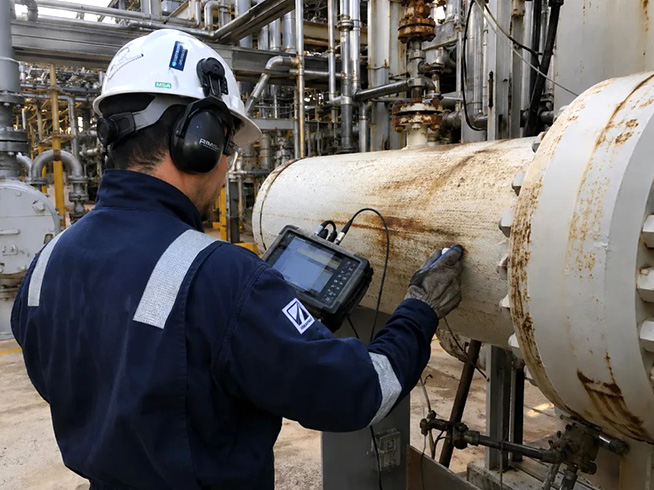
Our FFS services support the assessment of:
- Pressure Vessels
- Process Piping
- Pipelines
- Storage & Process Equipment
- Drums and Critical Components
Why Fitness for Service
Know the Condition. Plan the Future.
Safety
Identify defects that could affect safe operation.
Reliability
Understand whether equipment can continue performing under operating conditions.
Remaining Life
Estimate how long an asset can safely remain in service.
Cost Efficiency
Avoid unnecessary replacement while reducing the risk of unexpected failures.
How It Works
Our Fitness for Service Assessment Process
IRC follows a structured approach combining inspection data with engineering assessment.
Asset & Data Review
Operating history, design information, materials, inspection records, and process conditions are reviewed.
Advanced NDT Inspection
Suitable NDT techniques are selected to identify and accurately characterise corrosion, cracks, thinning, and other defects.
Defect Evaluation
Inspection findings are analysed to determine the type, location, dimensions, and severity of the identified defect.
Engineering & Remaining Life Assessment
The data is evaluated using API 579 methodologies and engineering calculations to determine whether the equipment can continue operating.
Technical Report
A detailed assessment report is prepared with findings, calculations, conclusions, and recommended actions.
Our Technology
Engineering-Led Fitness for Service Assessment
IRC combines field inspection capabilities with specialised engineering software to deliver a more complete assessment.
Advanced NDT Solutions
Inspection techniques to accurately identify and characterise defects.
API 579 Assessment Methodology
Structured engineering evaluation for different types of damage and equipment conditions.
Engineering & FEA Software
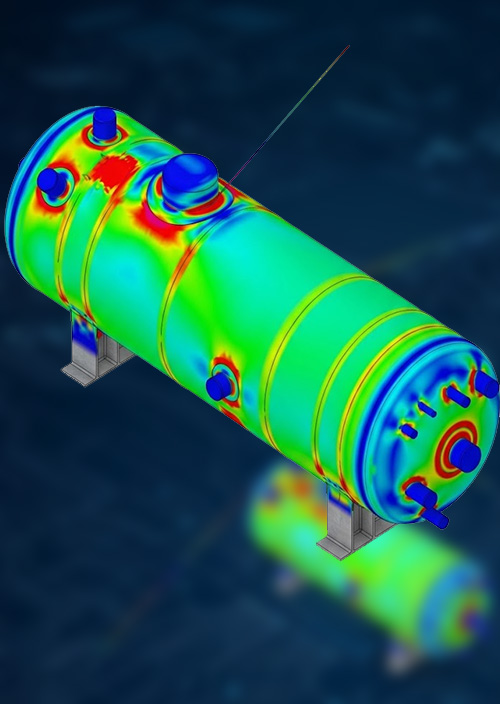
Specialised software supports defect evaluation, stress analysis, and remaining-life assessment.
Corrosion Engineering Expertise
Experienced specialists interpret inspection data and assess degradation mechanisms.
Where It Is Applied
Applications of Fitness for Service Assessment
Pressure Vessels
Assessment of corrosion, cracking, thinning, and other damage affecting vessel integrity.
Process Piping
Evaluation of ageing and damaged piping systems to determine continued fitness for operation.
Pipelines
Assessment of defects and degradation in critical oil and gas transportation pipelines.
Storage & Process Equipment
Evaluation of equipment exposed to long-term operation and harsh process conditions.
Critical & Ageing Plant Components
Engineering assessment of components where failure could have significant consequences, and support for safely extending operating life.
Why IRC?
Why Choose IRC Engineering Services?
25+ Years
Extensive experience in inspection and asset integrity.
API-Based Expertise
Assessment methodologies aligned with API 579.
Advanced NDT
Modern inspection techniques for accurate defect data.
Engineering Analysis
Engineering-led evaluation of asset condition.
Practical Solutions
Clear recommendations focused on safety and asset life.
Client Testimonials
What Our Clients Say
“IRC's assessment approach gave us a much clearer understanding of the condition of our ageing equipment and helped us plan the next course of action with confidence.”
Client RepresentativeIndustrial Engineering Client
We would love to connect with you, please fill out this form and our dedicated team will respond to you shortly.