Bend Testing Services (Welds & Base Metal)
What Is It
A Simple Test That Reveals a Lot
Bend testing is a direct method to determine whether a weld or material can deform without cracking.
IRC Engineering performs bend testing to evaluate ductility, weld soundness, fusion quality, and hidden discontinuities in welds and base metals.
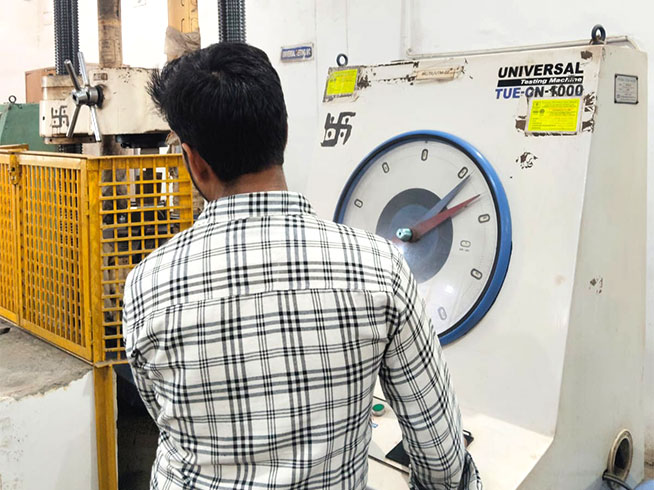
Our testing supports:
- Weld procedure qualification
- Welder qualification
- Base-metal ductility verification
- Failure investigation
Why Bend Testing
Why Choose Bend Testing?
A properly performed bend test provides a clear indication of whether a weld or material can withstand deformation without developing cracks.
Ductility
Confirms the material can deform without cracking.
Weld Soundness
Reveals defects that may affect weld integrity.
Crack Detection
Identifies cracks, tears, lack of fusion, and other discontinuities.
Qualification
Supports welding procedure and welder performance qualification.
How It Works
Our Bend Testing Method
We follow a controlled testing process using a Universal Testing Machine.
Specimen Preparation
A specimen is cut across the weld or from the base metal.
Test Setup
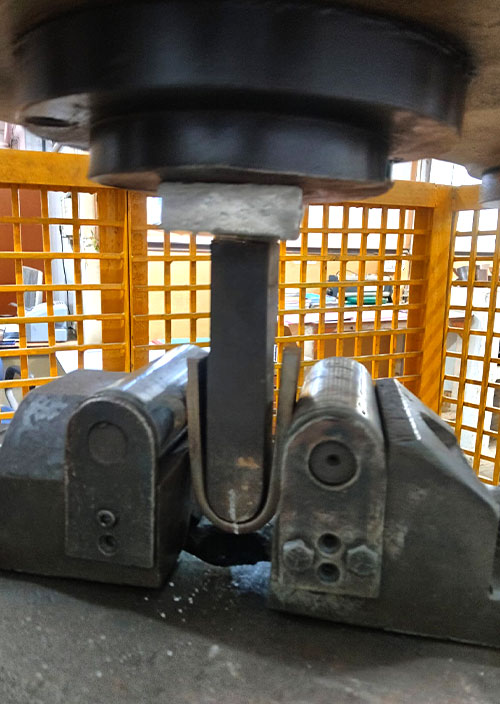
The specimen is positioned in the Universal Testing Machine and prepared for bending.
Controlled Bending
The specimen is bent around a specified radius to the required angle or until failure.
Visual Examination
The convex surface is examined for cracks, tears, and other discontinuities.
Result Evaluation
The specimen is assessed against the applicable acceptance requirements to determine ductility and weld soundness.
Test Types
Types of Bend Tests We Perform
Face Bend
Tests the weld face surface in tension.
Root Bend
Tests the weld root surface in tension.
Side Bend
Used for thicker sections to evaluate the full weld cross-section.
Each test provides a focused assessment of weld integrity and material ductility.
Applications
Where Bend Testing Is Essential
Welding Procedure Qualification
Supports PQR requirements under ASME Section IX and related codes.
Welder Performance Qualification
Confirms a welder can consistently produce sound welds.
Material Ductility Verification
Checks base-metal formability and resistance to cracking.
Failure Investigation
Helps determine whether inadequate ductility contributed to an in-service failure.
Weld Quality Assessment
Reveals problems such as lack of fusion, porosity, inclusions, and cracking.
Why IRC
Why IRC Engineering Services?
25+ Years Experience
Experienced in welding and material testing applications.
Skilled Experts
Testing performed by trained professionals using controlled procedures.
Universal Testing Machine
Mechanical testing performed using suitable UTM-based equipment.
Reliable Results
Clear evaluation of cracks, discontinuities, ductility, and weld soundness.
Flexible Testing
Suitable for weld qualification and material evaluation requirements.
A fast, direct answer on weld and material soundness.
We would love to connect with you, please fill out this form and our dedicated team will respond to you shortly.